
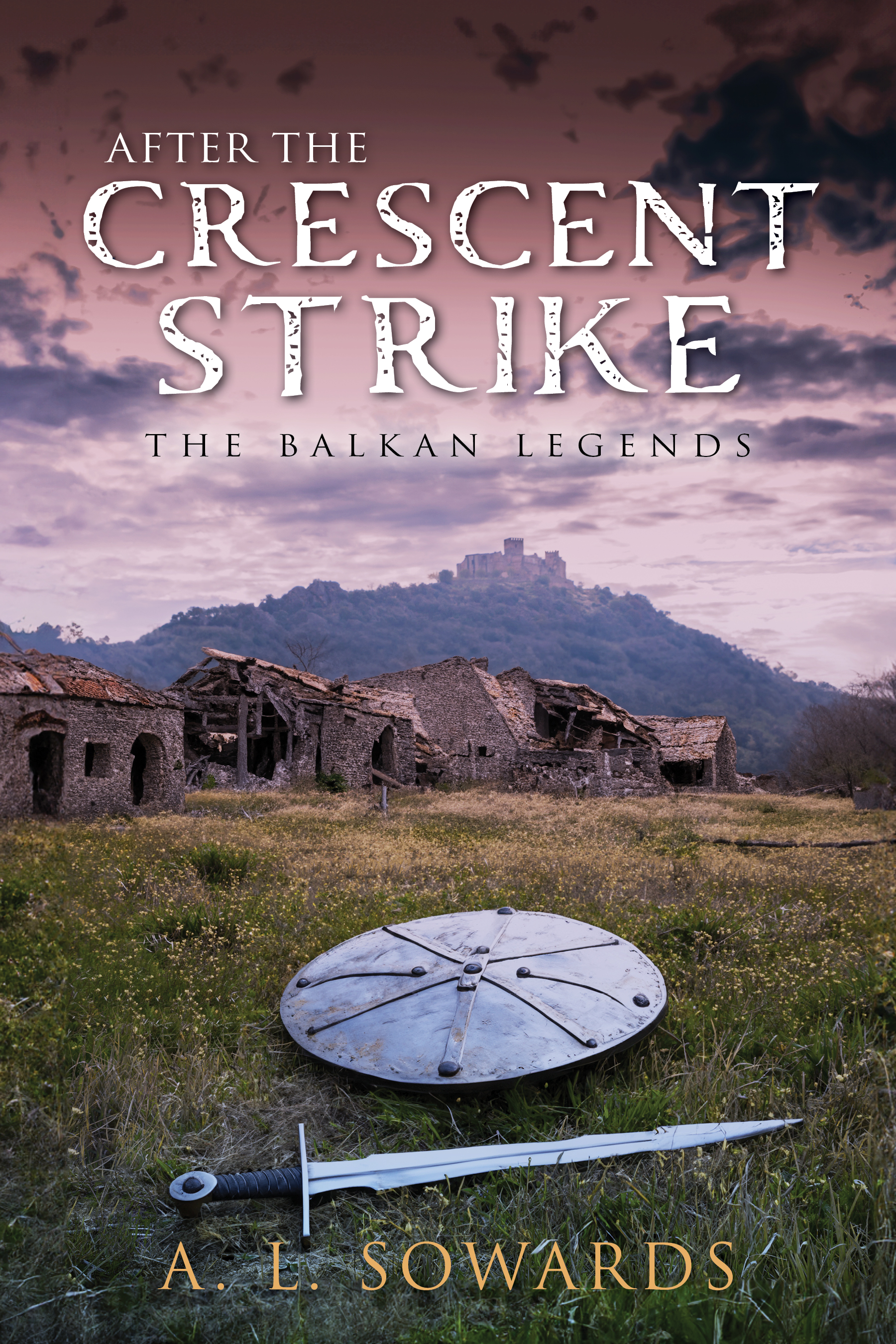
As portrayed in this novel, a large army of Serbs marched east in September 1371 with plans to retake Adrianople (Edirne) from Ottoman hands while Sultan Murad campaigned in Anatolia. They never made it. They were attacked in a night battle that left the Serbs weak and the Turks triumphant. Though the Ottoman Empire would not have complete control over Serbia for some time, the Battle of Maritsa was a key turning point leading to Ottoman dominance of the Balkans for hundreds of years. The Ottoman Empire would grow in strength until another historical turning point, the 1683 Siege of Vienna, and then ultimately dissolve in the aftermath of WWI. (For more information on the 1683 Siege of Vienna, I recommend my novel Before the Fortress Falls.)
Some elements of the Battle of Maritsa are known, but some remain unclear in the historical record. Most historical accounts place the initial Ottoman capture of Adrianople sometime between 1361 and 1369, so perhaps as long as a decade before Maritsa but possibly only two years before the campaign shown in this book. The betrayal that led to the watchmen being recalled is invented for the purpose of this series, but betrayal is a theme that runs deep in historical accounts of the time, so it seemed fitting. The pillaging that followed the defeat of the army is from the historical record. Magdalena’s village is fictional but is based on typical villages of the time and place. The Serb king, Kral Vukašin, was a real historic figure, and he and his brother both perished at Maritsa, as portrayed in this novella. The Serb emperor would also die before the year’s end, leaving Serbian nobility without a clear leader for a time. The infighting that followed between various Serb and other Christian rulers made it even easier for the Ottomans to increase their hold in Eastern Europe. Župans Miroslav, Dragomir, and Konstantin are fictional, as is Rivak and Rivakgrad, but I patterned them after the historical role of župans and župas.
I have done my best to be true to the history and culture of the people portrayed in this novel. Only a generation removed from the Black Death (usually called the Great Mortality by contemporaries), the Serbs were in the process of rebuilding. War refused to give them the breathing space they needed to fully recover from the severe depopulation brought on by the plague.
Throughout the book, I have tried to balance historical attitudes and beliefs of Christianity with my own religious understanding. For most medieval Christians, penance was a normal part of repentance, even for grievances we in the twenty-first century would not consider sins, such as miscarriage. Details of penance length is taken from history, but there were almost certainly exceptions to each rule.
I hope you will join me for more of The Balkan Legends series as I explore the years when Serbs and other Christian groups fought the Turks for the fate of Eastern Europe. The Balkan Legends series spans roughly two decades of history and includes moments of triumph, times of setback, courage, sacrifice, and intense inner and outer journeys for several fictional characters who live through these times. You can expect Konstantin’s story in Beneath a Crescent Shadow, Ivan’s story in Beyond the Crescent Sky, and Danilo’s story in Against a Crescent Storm. Other characters in the books will show the life and work of medieval midwives and mosaicists, offering a view of history beyond that of the leaders and warriors.
I wish to thank Arlem Hawks, Ron Machado, Kathi Oram Peterson, Charissa Stastny, and Bev Walkling for their beta reads of this story. Also, a huge thank-you to the publishing teams at both Covenant and Shadow Mountain for their work in seeing this series brought to readers.
If you enjoyed this novella, please share your recommendation in person, on social media, or online wherever books are sold or discussed. Word of mouth is key to any book’s success, and I’m incredibly grateful when fans recommend my books to others.
 A. L. Sowards